13th edition
CAMAI 2026
The history of computer science seminar is dedicated to Grace Murray Hopper, who built the first compiler and made programming languages readable.

The Conference on Applied Mathematics and Informatics is organized by Faculty of Engineering and Informatics from Spiru Haret University and by Research Center in Mathematics and Informatics, affiliated to Central Institute for Scientific Research from Spiru Haret University.
The conference is mainly addressed to researchers in mathematics, computer science and information technologies, and includes theoretical and applied mathematics and computing topics.
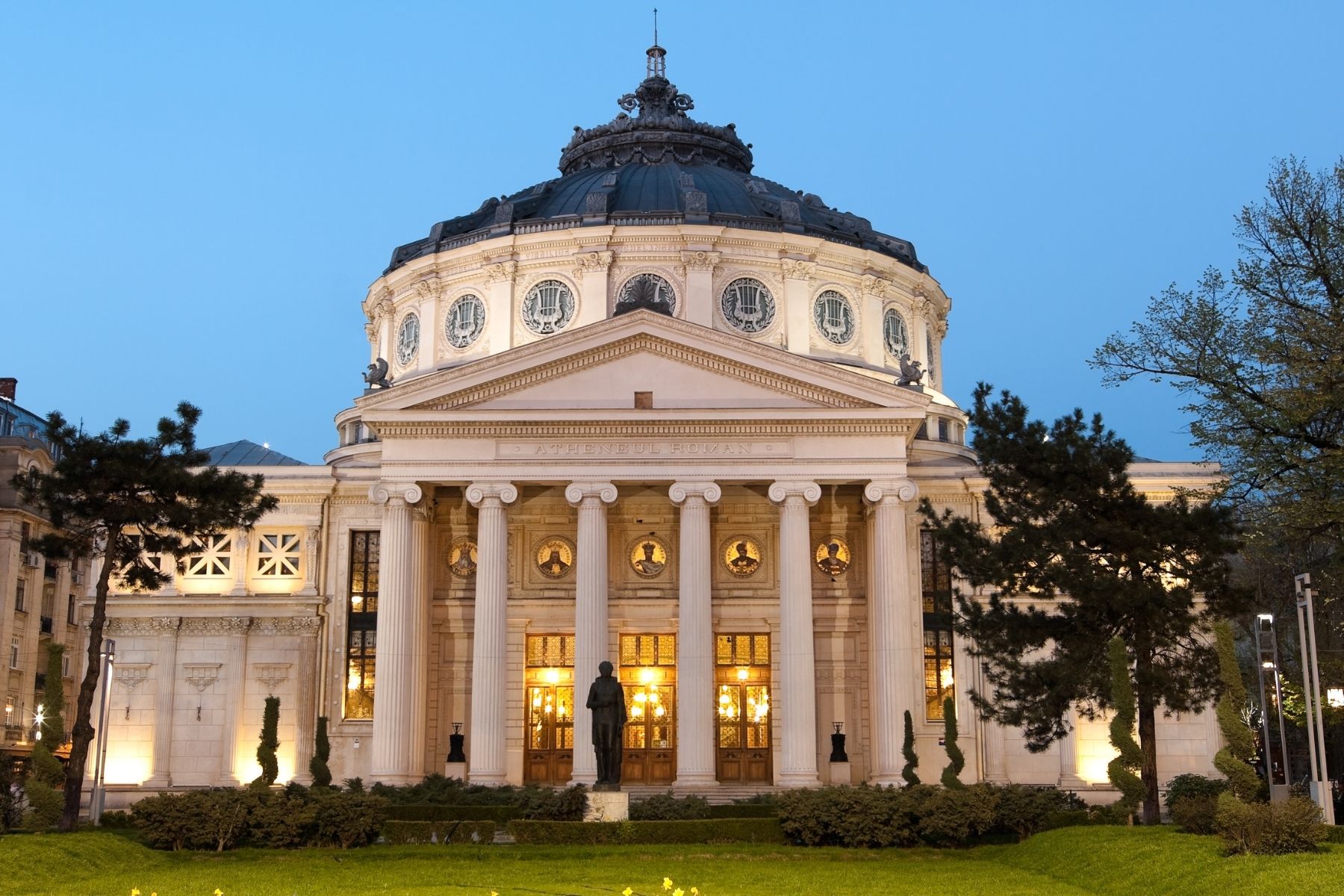
The conference takes place in Bucharest, 46Gth Fabricii Street, the location of Faculty. Every year, the conference is dedicated to a major local, national or international event.
The mission of Cybersecurity 2030: Are We Prepared for the Next Decade of Cyber Threats? extends beyond cybersecurity, embracing the interconnected disciplines of software engineering, computational methods, artificial intelligence, and machine learning. This event seeks to provide a multidisciplinary platform where experts, researchers, and practitioners come together to address the complex challenges that span across these fields. By integrating insights from software engineering, computational modeling, and the transformative power of AI and machine learning, the conference aims to drive innovative solutions that enhance the resilience and adaptability of cyber defense mechanisms.
Participants will explore how these fields converge to fortify cybersecurity, from developing robust software architectures to deploying machine learning models capable of real-time threat detection. The event emphasizes the essential role of interdisciplinary collaboration in preparing for the next decade of digital challenges, highlighting how advances in software and computational methods power critical cybersecurity initiatives and how AI accelerates threat prediction, analysis, and response.
Through this mission, CAMAI 2026 aspires to build a collaborative community of forward-thinking professionals dedicated to safeguarding the digital landscape, fostering innovation at the intersection of cybersecurity and emerging technologies, and nurturing the next generation of leaders in engineering, data science, and cyber defense.
In an era where digital threats continue to evolve in complexity, quantum computing and quantum cryptography are set to revolutionize the cybersecurity landscape. The mission of CAMAI 2026 recognizes the transformative potential of these fields, especially as traditional cryptographic methods face increasing vulnerability in the wake of quantum advancements. Quantum computing promises unprecedented computational power that could both advance cybersecurity defenses and, conversely, pose significant risks by rendering conventional encryption methods obsolete.
The conference seeks to highlight the critical importance of quantum-resistant cryptographic solutions and the development of protocols that can withstand the capabilities of quantum-based attacks. By exploring quantum computing’s impact across software engineering, AI, and cybersecurity, CAMAI 2026 aims to prepare participants for the next frontier in secure computing. Embracing quantum cryptography’s promise of unbreakable encryption, the event will delve into current research and practical strategies for integrating quantum-safe measures, underscoring the urgent need for preparedness in an approaching quantum era. This focus not only elevates the importance of interdisciplinary collaboration but also places CAMAI 2026 at the forefront of innovation in secure digital technologies.
The organizers wish this conference to be an important international event in applied mathematics and computing.
The first edition occurs in 2007.
From 2013, the conference includes a special section for History and Pedagogy of Mathematics and Computer Science. In 2026 that section is dedicated to Grace Hopper.
Grace Murray Hopper took a PhD in mathematics at Yale in 1934, joined the Navy Reserve in 1943, and was assigned to the Bureau of Ordnance Computation Project at Harvard, where she programmed the Mark I. In 1952 she wrote the A-0 system, the first compiler, at a time when the prevailing view was that a computer could only do arithmetic. Her work on FLOW-MATIC led directly to COBOL, and to the idea that a program could be written in something close to English and then translated for the machine.
She also spent decades teaching. She handed out lengths of wire cut to 11.8 inches, the distance light travels in a nanosecond, so that an audience could hold the cost of a delay in their hands. The history and pedagogy of computer science session at CAMAI 2026 takes that approach as its subject: how the field explains itself, and how it teaches the next generation.
Scientific researchers from the universities, research centers, industry and education institutions are invited to send original research contributions to be considered for review and presentation in CAMAI 2026 sections.
Submission of paper abstracts is equivalent with pre-registration.
| Abstract submission closes | 30 October 2026 |
|---|---|
| Notification of acceptance | 6 November 2026 |
| Final version due | 13 November 2026 |
| Conference opens | 20 November 2026 |
Abstracts will be sent as PDF files and will include the following information:
Abstracts will be in English. Abstract length must be between 1 and 2 pages (A4 size).
Abstracts and full papers go through EasyChair, which tracks your submission and the reviewers' response in one place. Everything you need is in the Submit a Paper section below.
For questions the platform cannot answer, write to secretariat_misn@spiruharet.ro
Final registration is confirmed by e-mail once your paper is accepted.
Create a free EasyChair account if you do not have one, select CAMAI 2026, and upload your PDF. You can revise it as often as you like until the deadline, and the reviewers' response arrives in the same place.
Go to EasyChairPage size, margins, heading levels and the reference style are already set. Type into it rather than restyling your own document.
The same layout as a LaTeX source file: 170 by 235 mm page, the Annals heading block, the abstract and keywords structure, and a worked reference list.
Check that the title, every author name and affiliation, the corresponding e-mail, the abstract, keywords and an AMS or ACM classification are all present, and that the file is a PDF.
Trouble with the upload? Send the paper to secretariat_misn@spiruharet.ro and the secretariat will register it for you.